CT Foundation

  • Home
  • About us
  • Who We Are
  • Activities
    • Current Activities
    • Seminar and Workshop
    • Research and Report
    • All Activities
  • Events
    • New Event
    • Old Event
  • Documents
    • International
    • Bangladesh
    • CTF Videos
    • CTF Research & Publication
  • Article & Debate
  • Gallery
  • Contact Us
  • Donate

Monthly Archives: জুন ২০১৩

Paper clips Land CTF Seminar 15 June 13

Posted on জুন ১৯, ২০১৩ by ctfoundation Posted in CT Welcome .


Sunday, June 16, 2013

Participatory approach to land acquisition sought

Staff Correspondent

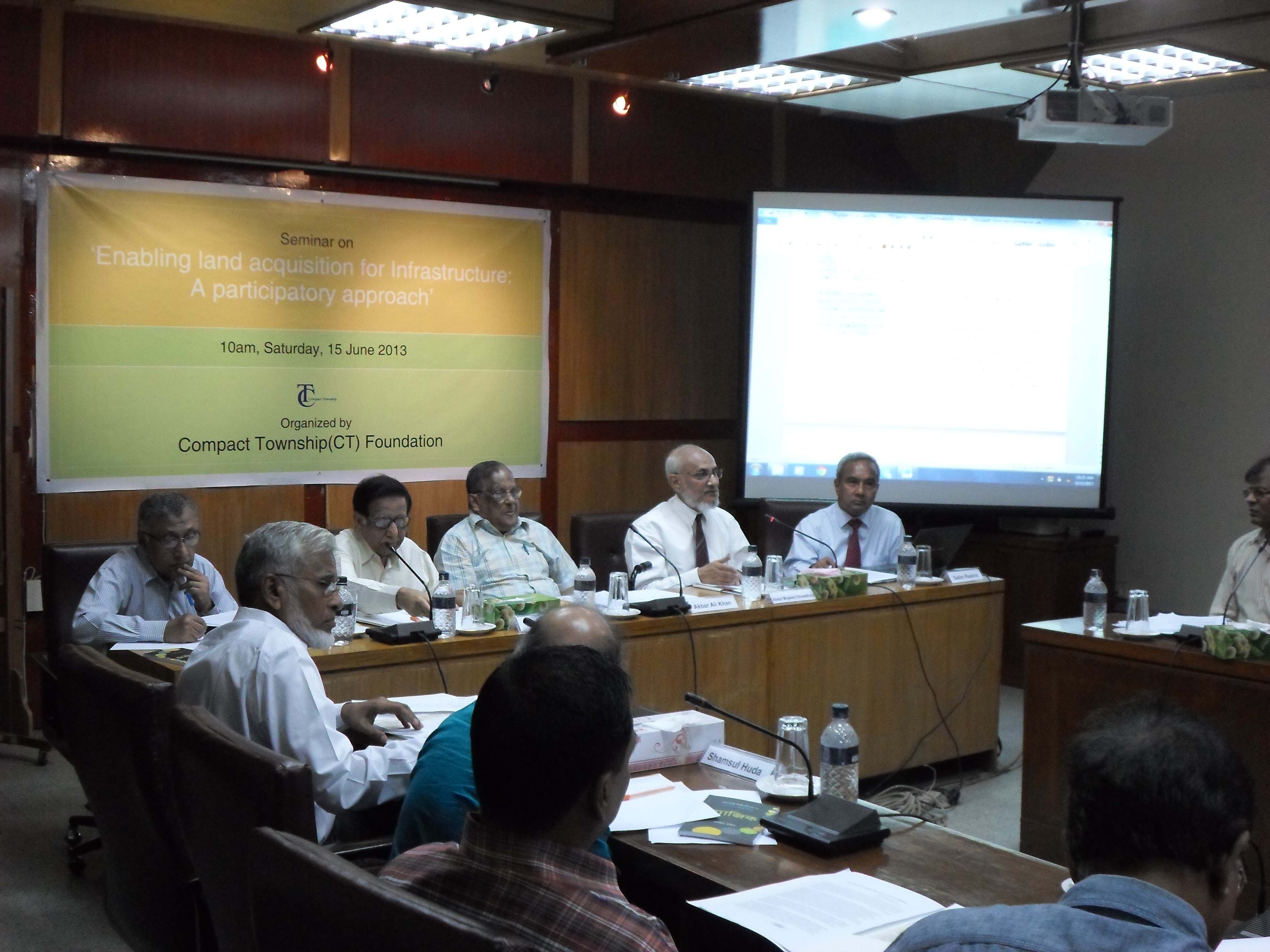
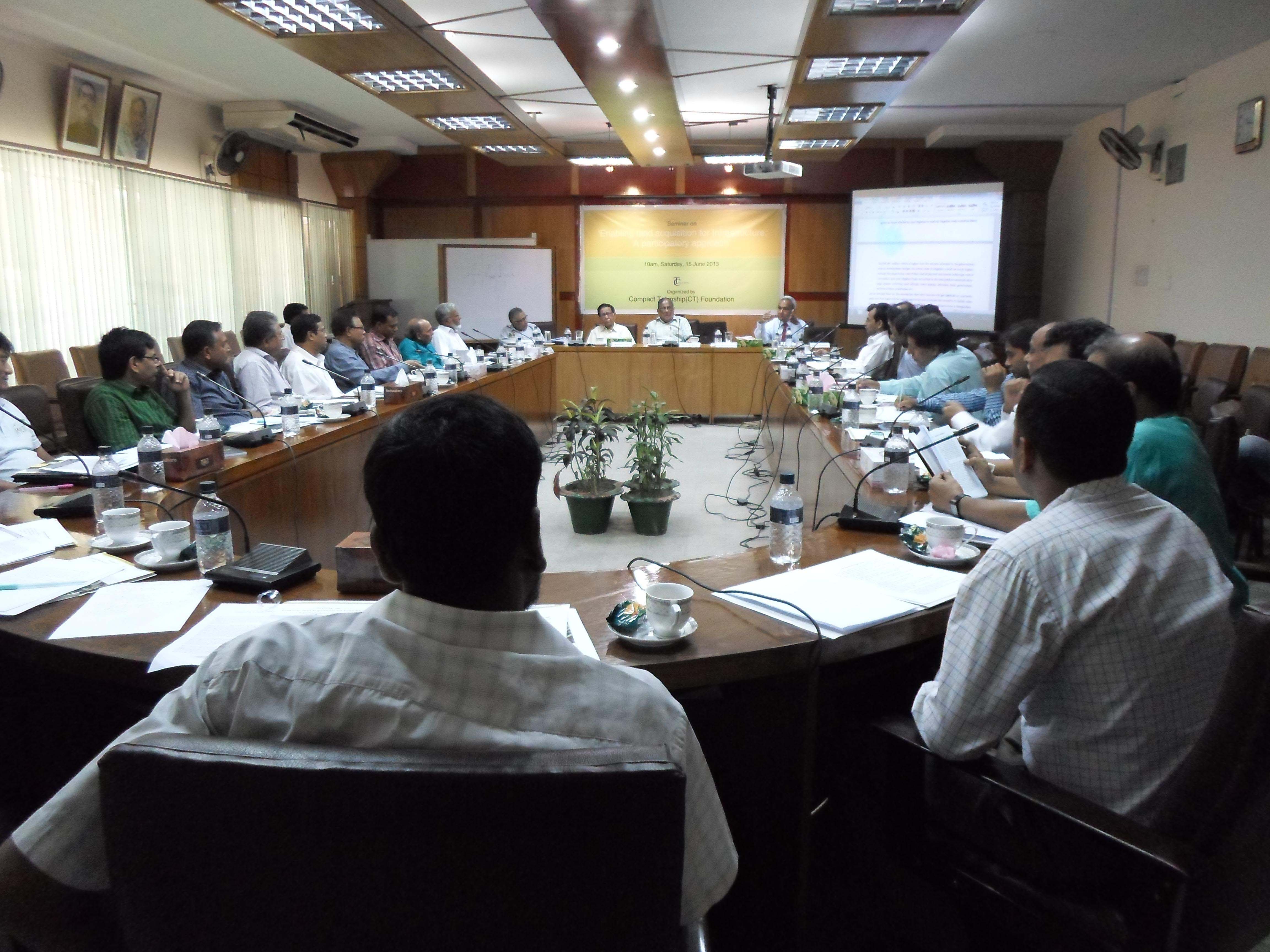
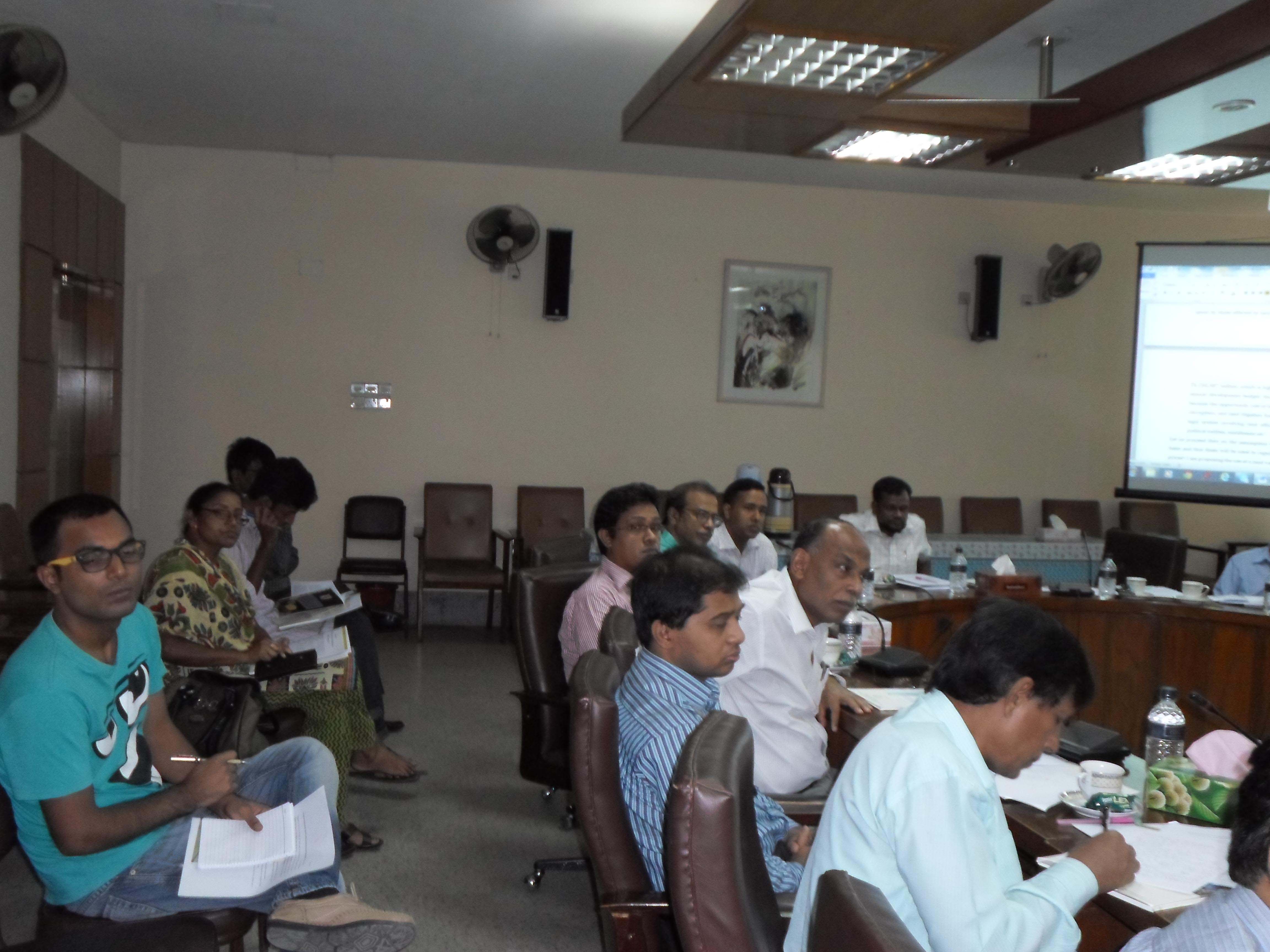
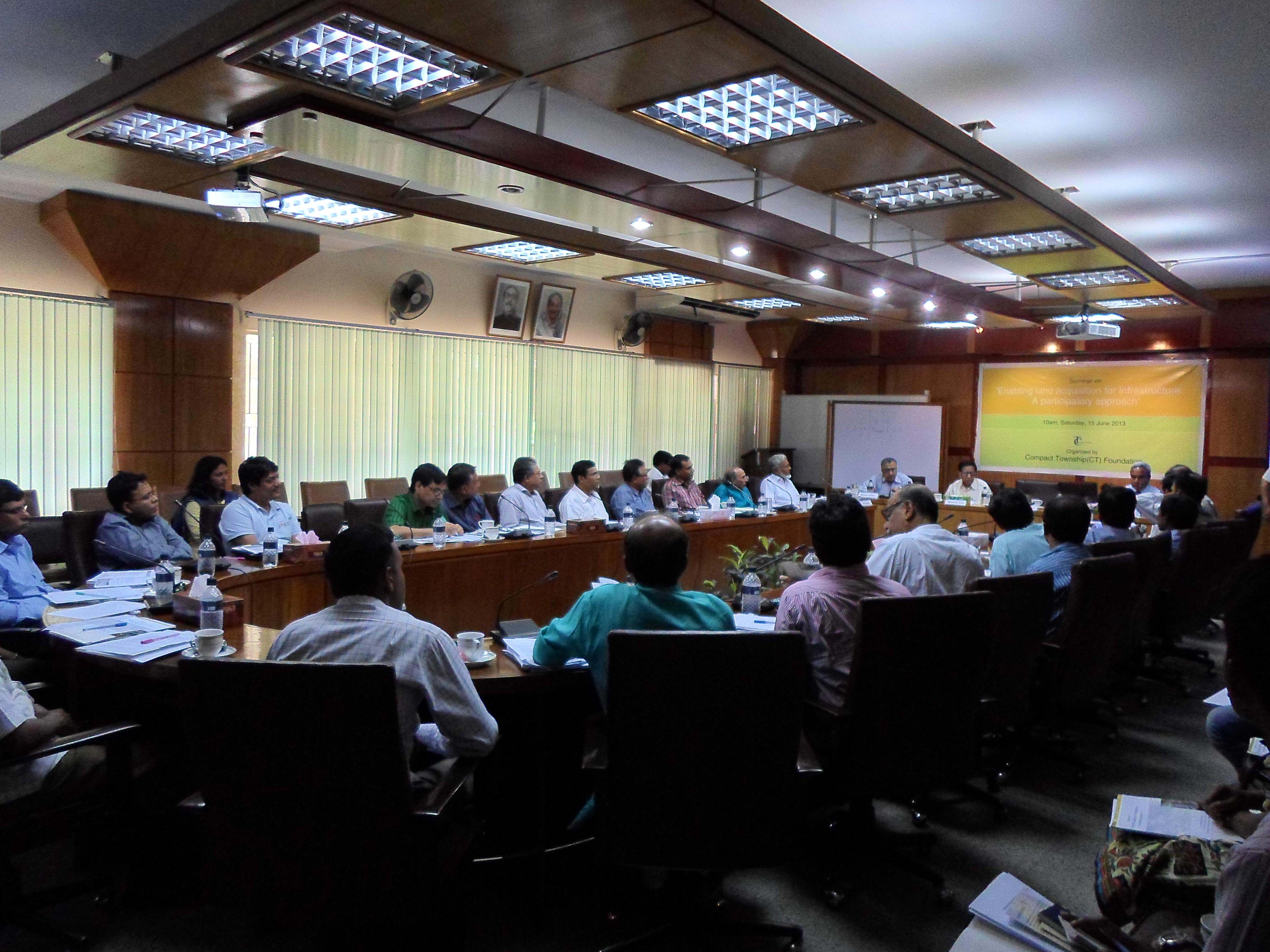
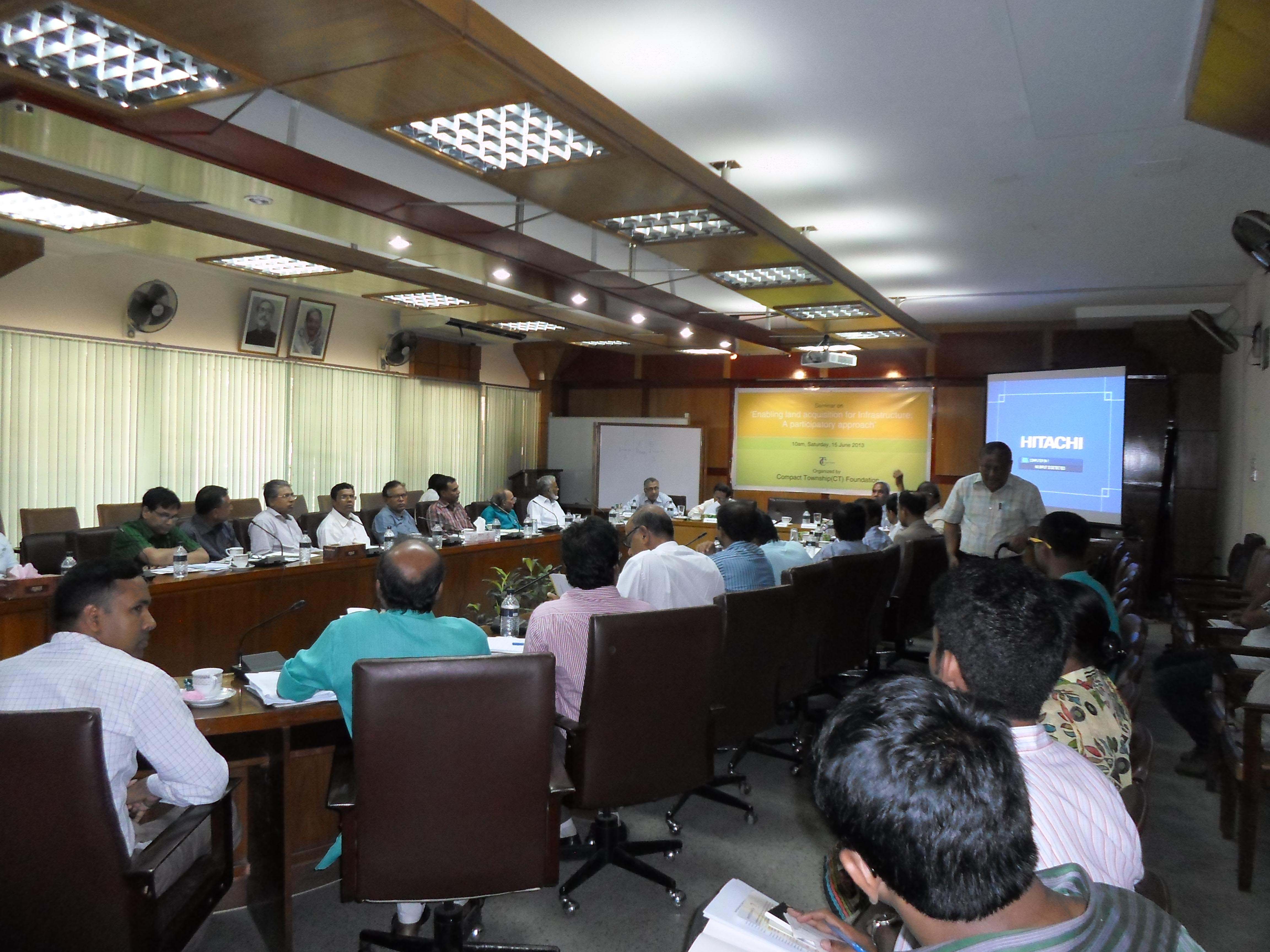
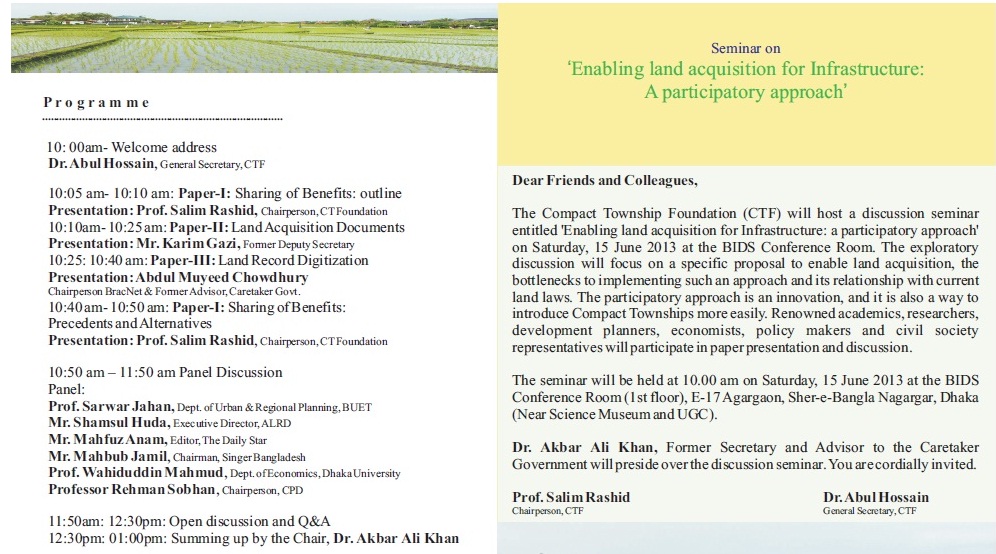
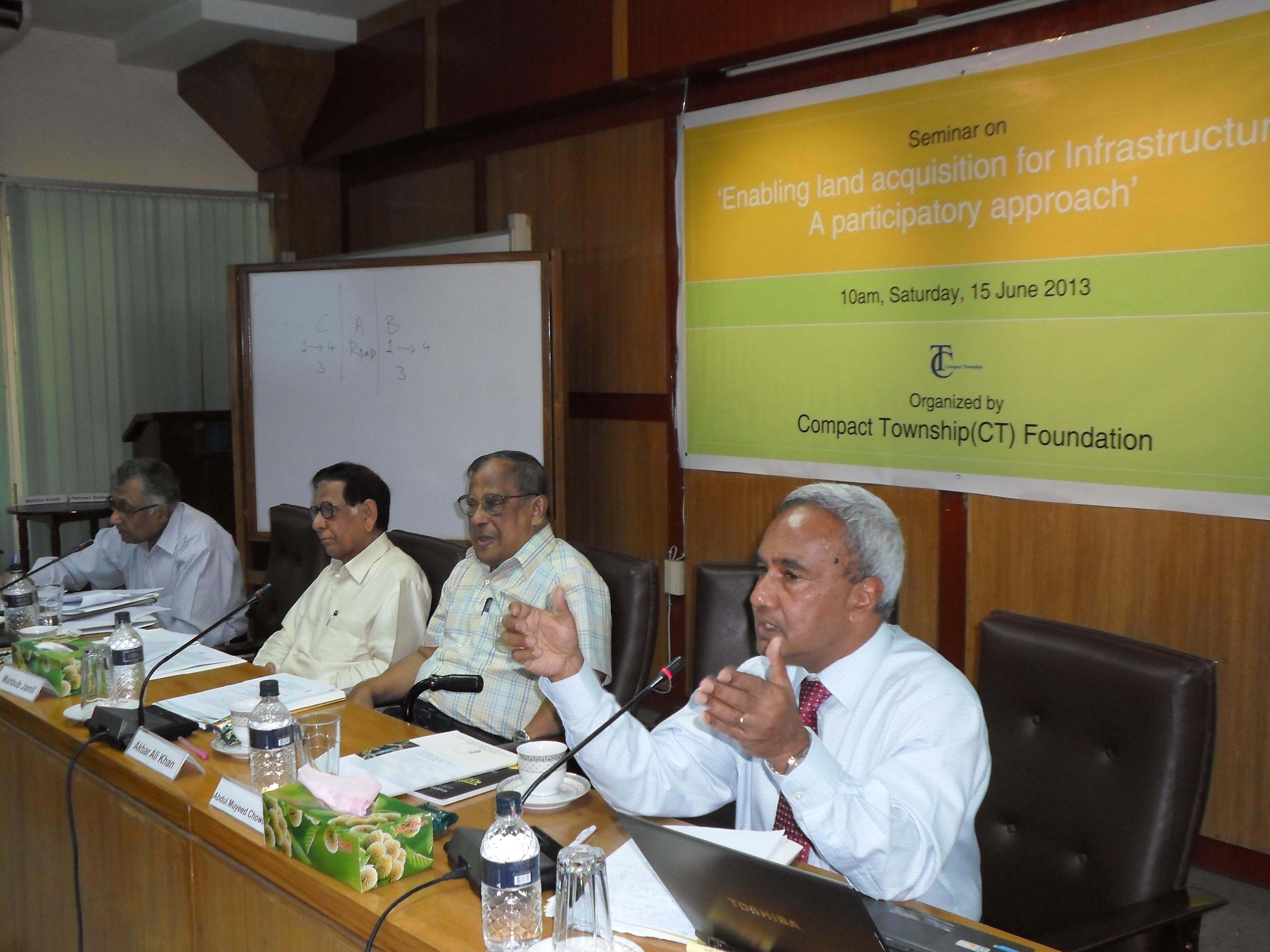
Speakers at a seminar yesterday recommended that the government goes for a participatory approach while acquiring land for infrastructural development to benefit all, including the landowner.

They said the government could create a win-win situation like sharing profits from the infrastructural development with the landowner.
The land management system, lengthy at present, could improve if the land records are digitised, helping the government earn the trust of the landowners, they added.
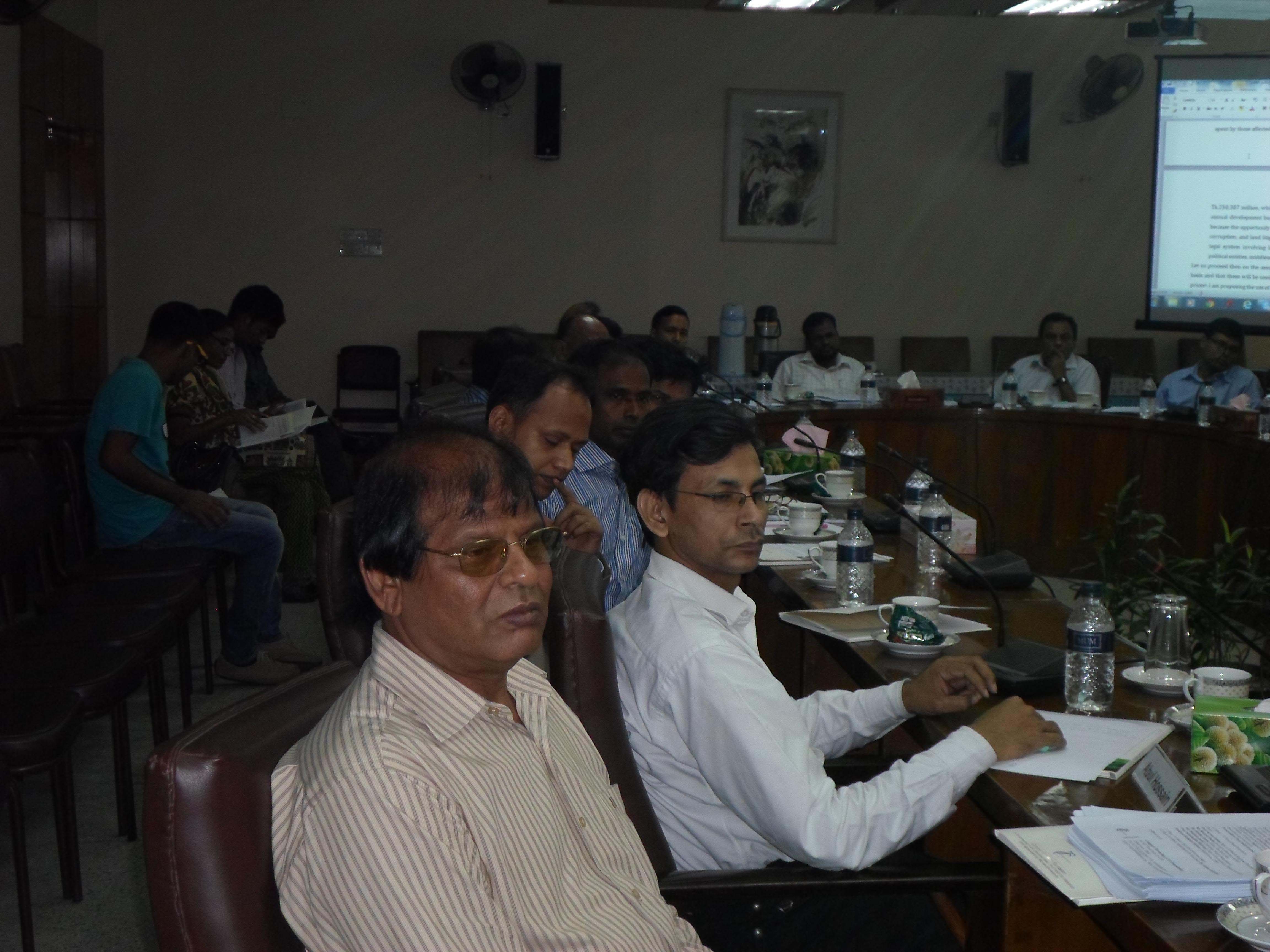
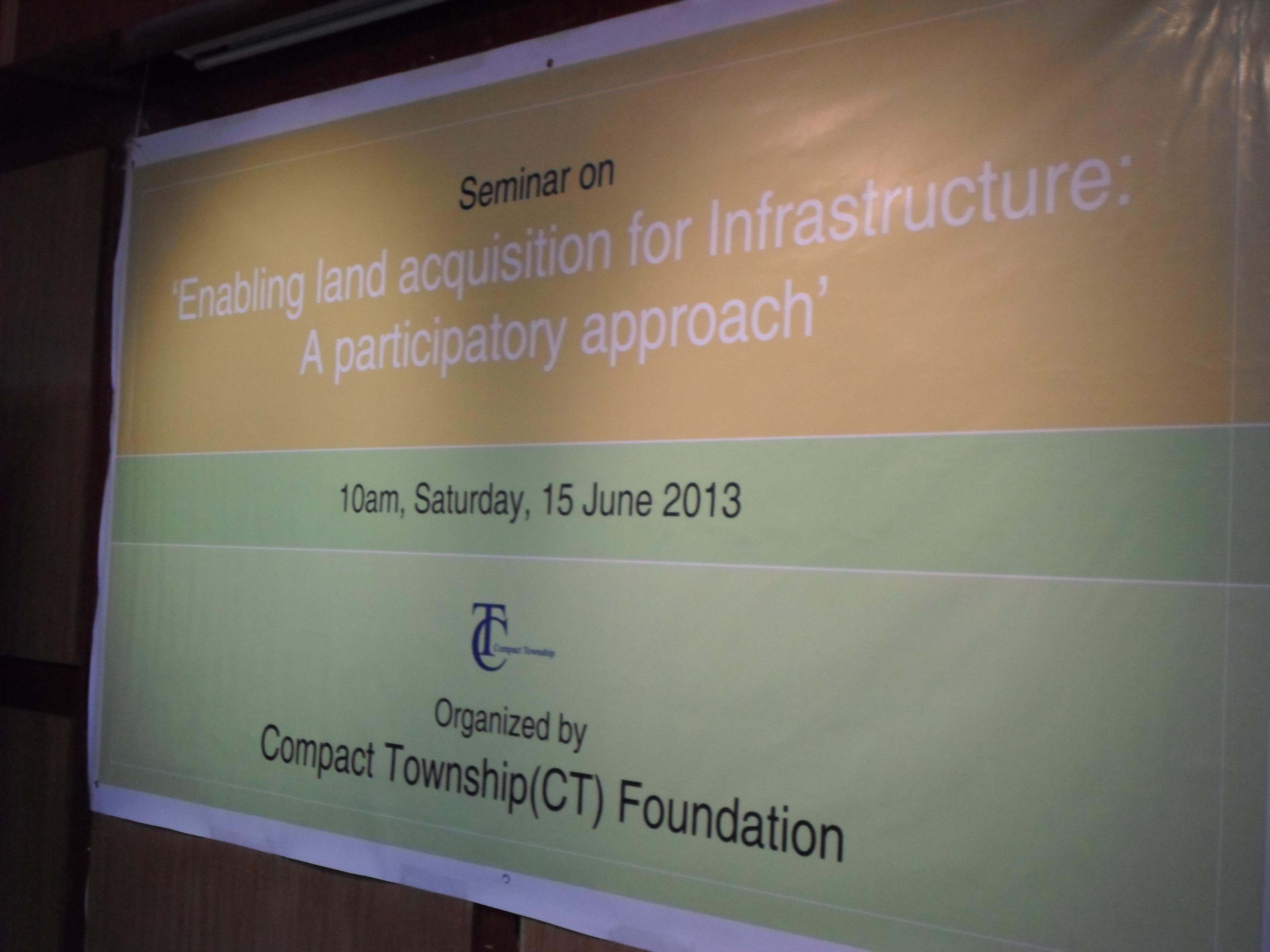
The seminar, “Enabling Land Acquisition for Infrastructure: A Participatory  Approach”, was organised by Compact Township (CT) Foundation, Bangladesh, a development organisation, in the capital’s Bangladesh Institute of Development Studies.
One reason why landowners dislike government acquisition, for instance for a road, is that while that person gets a nominal compensation, adjoining landowners make more profit for that new road, said CT Foundation Chairperson Prof Salim Rashid. Chairing the seminar, former adviser to a caretaker government Akbar Ali Khan said digitisation of land records could improve the situation but awareness from the root level was also required.

বিআইডিএসের সেমিনারে বক্তারা

বিরোধ এড়াতে ভূমি রেকর্ড আধুনিকায়ন করতে হবে

নিজস্ব প্রতিবেদক | তারিখ: ১৬–০৬–২০১৩

অবকাঠামো নির্মাণে ভূমি অধিগ্রহণ: অংশগ্রহণমূলক মনোভাব’ শীর্ষক সেমিনারে বক্তারা বলেছেন, ভূমিসংক্রান্ত বিরোধ এড়াতে গেলে ভূমি রেকর্ড পদ্ধতির আধুনিকায়ন করতে হবে। ভূমি অধিগ্রহণের ক্ষেত্রে ভূমির মালিকদের অংশীদারি ও ক্ষতিপূরণের বিষয়টি নিশ্চিত করতে হবে।
কমপ্যাক্ট টাউনশিপ ফাউন্ডেশনের আয়োজনে গতকাল শনিবার আগারগাঁওয়ে বাংলাদেশ উন্নয়ন গবেষণা প্রতিষ্ঠানের (বিআইডিএস) সম্মেলনকক্ষে সেমিনারটি অনুষ্ঠিত হয়।
সেমিনারে সভাপতিত্ব করেন সাবেক তত্ত্বাবধায়ক সরকারের উপদেষ্টা আকবর আলি খান। তিনি বলেন, ভূমিসংক্রান্ত জটিলতা নিরসনে তথ্যপ্রযুক্তি ব্যবহারের মাধ্যমে ভূমি রেকর্ডকে আধুনিকায়ন করা প্রয়োজন, তবে তা যথেষ্ট নয়। ভূমিসংক্রান্ত জটিলতা নিরসনের জন্য বিশেষ ট্রাইব্যুনাল গঠন করা যেতে পারে, যেখানে ভূমি অফিস, সাব-রেজিস্ট্রার অফিস ও আদালত সমন্বিতভাবে কাজ করতে পারেন।
অধিগ্রহণকৃত ভূমির মালিকদের ক্ষতিপূরণের বিষয়ে আকবর আলি খান বলেন, ক্ষতিপূরণ-সংক্রান্ত জটিলতা এড়াতে দুই স্তরের ক্ষতিপূরণের ব্যবস্থা করা যেতে পারে। প্রথম স্তরে মালিককে অধিগ্রহণ করা ভূমির মূল্য পরিশোধ করা, দ্বিতীয় স্তরে অধিগ্রহণকৃত ভূমিতে নির্মিত অবকাঠামো থেকে প্রাপ্ত মুনাফার একটি নির্দিষ্ট হারে ক্ষতিপূরণ দেওয়া।
তথ্যপ্রযুক্তি ব্যবহারের মাধ্যমে ভূমি রেকর্ডকে আধুনিকায়নের বিষয়ে প্রবন্ধ উপস্থাপন করেন ভূমি মন্ত্রণালয়ের সাবেক সচিব আবদুল মূয়ীদ চৌধুরী। তিনি বলেন, বিভিন্ন মৌজা মানচিত্র, সিএস ও আরএস রেকর্ডসহ অন্যান্য নথি ডিজিটাইজ করে সংশ্লিষ্ট কার্যালয়গুলোতে রাখলে এগুলো বিকৃত করার সুযোগ থাকবে না।
আয়োজক প্রতিষ্ঠানের চেয়ারপারসন ও যুক্তরাষ্ট্রের ইলিনয় ইউনিভার্সিটির ইমেরিটাস অধ্যাপক সেলিম রশিদ বাংলাদেশে ভূমি অধিগ্রহণের ক্ষেত্রে ভূমির মালিকদের অংশীদারি ও ক্ষতিপূরণের বিষয়টি নিশ্চিত করার বিষয়ে গুরুত্ব দেন। সাবেক উপসচিব করিম গাজী বাংলাদেশে ভূমি অধিগ্রহণের পদ্ধতি নিয়ে প্রবন্ধ উপস্থাপন করেন।
সেমিনারের বিষয়বস্তুর ওপর প্যানেল আলোচনা করেন বাংলাদেশ প্রকৌশল বিশ্ববিদ্যালয়ের (বুয়েট) নগর ও অঞ্চল পরিকল্পনা বিভাগের অধ্যাপক সারওয়ার জাহান, অ্যাসোসিয়েশন ফর ল্যান্ড রিফর্ম আন্ড ডেভেলপমেন্টের (এএলআরডি) নির্বাহী পরিচালক শামসুল হুদা, সিঙ্গার বাংলাদেশের চেয়ারম্যান মাহবুব জামিল প্রমূখ। প্যানেল আলোচনার পর মুক্ত আলোচনা ও প্রশ্নোত্তর পর্ব অনুষ্ঠিত হয়।


অর্থনীতি প্রতিদিন

রবিবার ১৬ জুন ২০১৩

জমির যথার্থ ব্যবহারে প্রবৃদ্ধি হবে ১০ শতাংশ’

অর্থনীতি প্রতিবেদক | |

জমির ব্যবস্থাপনা জটিলতায় বাধাগ্রস্ত হচ্ছে প্রবৃদ্ধি অর্জন। দেশে প্রতি বছর প্রায় ১ শতাংশ আবাদি জমি হারাচ্ছে আনুভূমিক আবাসন বৃদ্ধির কারণে। জমি অধিগ্রহণ পর্যায়ে জনগণের অংশীদারিত্ব নিশ্চিত এবং এর অর্থনৈতিক ব্যবহার নিশ্চিত হলে ১০ শতাংশ প্রবৃদ্ধি অর্জন সম্ভব।
‘অবকাঠামো উন্নয়নে জমি অধিগ্রহণ : অংশগ্রহণমূলক প্রক্রিয়া’ শীর্ষক সেমিনারে বক্তারা এসব কথা বলেন। রাজধানীর আগারগাঁওয়ের বিআইডিএস কার্যালয়ে অনুষ্ঠিত ওই সেমিনারে সভাপতিত্ব করেন  তত্ত্বাবধায়ক সরকারের সাবেক উপদেষ্টা ড. আকবর আলি খান। কমপ্যাক্ট টাউনশিপ ফাউন্ডেশনের আয়োজনে সেমিনারে মূল প্রবন্ধ পাঠ করেন ইলিয়ন বিশ্ববিদ্যালয়ের অধ্যাপক অ্যামিরেটাস অর্থনীতিবিদ সেলিম রশিদ।
এ ছাড়া পৃথক প্রবন্ধ উপস্থাপন করেন সাবেক তত্ত্বাবধায়ক সরকারের উপদেষ্টা ও ব্র্যাক নেটের চেয়ারপারসন আবদুল মুয়ীদ চৌধুরী, সাবেক উপ-সচিব কমির গাজী। বক্তব্য রাখেন বাংলাদেশ প্রকৌশল বিশ্ববিদ্যালয়ের অধ্যাপক সারওয়ার জাহান, সিঙ্গার বাংলাদেশের চেয়ারম্যান মাহবুব জামিল, এএলআরডির নির্বাহী পরিচালক শামসুল হুদা প্রমুখ।
ড. আকবর আলি খান বলেন, জমি বা ভূমি ব্যবস্থাপনার জন্য প্রথমেই প্রয়োজন এর ব্যবস্থাপনায় ডিজিটালাইজেশন। এটি সরকারকেই করতে হবে, ব্যর্থ হলে হবে না। জমির সঠিক ব্যবহার নিশ্চিত করতে পারলে উন্নয়ন অর্থাৎ প্রবৃদ্ধি ত্বরান্বিত হবে।
তিনি আরো বলেন, ভূমি রেকর্ড বা এই সংশ্লিষ্ট কোনো কাজ বেসরকারি উদ্যোগে সম্পন্ন করার আয়োজন করা হলে সরকার বা কোনো আদালত তা মানবে না। এ ক্ষেত্রে বেসরকারি খাতকে সরকারের সঙ্গে এক হয়ে কাজ করতে হবে। জেলা পর্যায়ে থাকা ভূমি অফিস, সাব-রেজিস্ট্রি অফিস ও স্থানীয় আদালতের কাজের সমন্বয় থাকতে হবে।
জমি অধিগ্রহণের বিষয়ে জেলা পর্যায়ে স্বতন্ত্র ট্রাইব্যুনাল গঠনের প্রস্তাব দিয়ে সাবেক এই আমলা বলেন, একজন অবসরপ্রাপ্ত বিচারপতির সভাপতিত্বে গঠনকৃত ওই আদালত ভূমির মালিকানা নিয়ে কাজ করবে। এ ছাড়া মালিকানা ও জমি অধিগ্রহণের ফলে জমির প্রকৃত মালিককে কিভাবে অংশীদার করা যায় তা বের করতে হবে।
জমি অধিগ্রহণ জনগণের সম্মতিতে হওয়া প্রয়োজন উল্লেখ করে তিনি বলেন, আইন করে জমি অধিগ্রহণ করা সম্ভব নয়। এ জন্য চেতনার সৃষ্টি করতে হবে এবং অধিগ্রহণকৃত জমিকে কিভাবে মডেল শহর হিসেবে প্রতিষ্ঠা করা যায় তার জন্য কাজ করতে হবে।
জমি নিবন্ধনে ডিজিটাইলাইজেশন বিষয়ক প্রবন্ধে আবদুল মুয়ীদ চৌধুরী বলেন, ভূমি ডিজিটালাইজেশন সরকারের অগ্রাধিকারমূলক কর্মকা-ের মধ্যে থাকলেও চার বছরে উল্লেখযোগ্য এ খাতে অগ্রগতি হয়নি। এ জন্য তিনি বেসরকারি উদ্যোক্তাদের এগিয়ে আসার আহবান জানান। দেশের ভূমির রেকর্ডগুলো আধুনিকায়ন তথ্যপ্রযুক্তির আওতায় এনে এর জটিলতা দূরীকরণ এবং সহজে ব্যবহারের ওপর জোর দেন।
সারোয়ার জাহান বলেন, অবকাঠামো সংকটের একটি বড় কারণ জমি সংকট। দ্রুত নগরায়ণ হচ্ছে, তবে যথার্থ জমির ব্যবহার হচ্ছে না। উৎপাদনমুখী কোনো শিল্প স্থাপন না করতে পেরে রেমিট্যান্সের অর্থ জমিতে ব্যবহার হচ্ছে। জমি অধিগ্রহণের সঙ্গে জমির মালিককে সম্পৃক্ত করা গেলে অর্থনৈতিকভাবে দেশ লাভবান হবে।
এ ক্ষেত্রে বিকল্প কৌশল নির্ধারণের আহ্বান জানিয়ে তিনি বলেন, জমি ব্যবহারের ক্ষেত্রে জমির মালিকদের কিভাবে লাভবান করা যায় তা ঠিক করার সময় এসেছে। এ জন্য পাইলট প্রকল্প হাতে নেওয়া দরকার বলেও তিনি দাবি জানান।
মাহবুব জামিল বলেন, সীমিত ভূমির মধ্যে সব কিছু করতে হচ্ছে বিক্ষিপ্তভাবে। গুচ্ছ আকারে নগর স্থাপনের তাগিদ দিয়ে তিনি বলেন, এতে চাষের জমি রক্ষা পাবে। জমি অধিগ্রহণের ক্ষেত্রে গরিবদের সহজে মালিকানা থেকে সরানো গেলেও প্রভাবশালীদের সামনে যাওয়া যায় না। হাতিরঝিলের মধ্যে বিজিএমইএ ভবনের উদাহরণ দিয়ে তিনি বলেন, প্রভাবশালী একটি সংগঠনের কারণে অবৈধ হওয়া সত্ত্বেও এটি সরানো যাচ্ছে না।
মূল প্রবন্ধে সেলিম রশিদ কমপ্যাক্ট টাউনশিপ নামক নতুন ধারণা তুলে ধরেন। তিনি বলেন, এই সিটি আবাসন, হাসপাতাল, স্কুল-কলেজ, মার্কেট, গ্রামীণশিল্প ইত্যাদি অবকাঠামো তৈরি এবং স্থানীয় সরকারের পরিসেবাসহ সব মৌলিক প্রয়োজন ও নাগরিক সেবার একটি সমন্বিত রূপ। একেকটি কমপ্যাক্ট টাউন প্রায় ২০ হাজার জনসংখ্যাকে সমন্বিত সেবা দেবে।
কমপ্যাক্ট টাউনশিপের একমাত্র অর্থনৈতিক নীতি হচ্ছে উপকারী মানদ-ে লাভজনক এবং সমন্বিতভাবে ভূমির ব্যবহার আবাস সৌন্দর্যকরণ এবং সমন্বিত অর্থনীতির ব্যবহার সুসংহত করা।


Sunday, 16 June 2013

Public awareness needed to protect cultivable land: Akbar Ali Khan

DHAKA, JUNE 15: Former adviser to the caretaker government Dr Akbar Ali Khan said awareness should be built up among general people to protect cultivable land as well as ensure its proper utilisation. “Land registration has to be digitalised for its proper utilisation as economic development depends on land,” he said. He was addressing a seminar on “Enabling land acquisition for infrastructure: a participatory approach”, organised by Compact Township foundation at the auditorium of Bangladesh Institute of Development Studies (BIDS) on Saturday. Among others, former bureaucrats Abdul Muyeed Chowdhury, Professor of Bangladesh University of Engineering and Technology (BUET), Sarwar Jahan and chairman of Singer Bangladesh Mahbub Jamil addressed the seminar.

Economist Prof. Salim Rashid read out the key note paper.
Dr Akbar Ali Khan said, the authority for land registration should not be handed over to the private sector as it is the government that belong the authority.
He further said, the compensation provided to land owner during land acquisition is not sufficient.
About the solution of legal issues with regards to land acquisition, he suggested to hold the trial relating land acquisition forming a special tribunal in all districts.
Mahbub Jamil alleged, nobody can build house in Dhaka city without corruption and the government is giving scope to people to make money through corruption.
Abdul Muyeed said, the land related problems can be removed introducing digital recording and using the up to date technology.
Digitization of land records: What is the way forward

Posted on জুন ১৯, ২০১৩ by ctfoundation Posted in CT Welcome .

                                                                             Abdul-Muyeed Chowdhury

                                                            Former Secretary, Ministry of Land


Land has been the most valuable resource in Bangladesh since time immemorial when the economy was totally dependent on agriculture and revenue from land was the major source of income for the state. Since the second half of the 20th century progressively land has become a scarce resource in this country because of the manifold increase in the size of the population of this small country. Urbanization, development of physical infrastructure at various levels and sizes and expansion and proliferation of human settlements in the rural areas is increasingly eating up agricultural lands, wetlands and forest lands- –even open public spaces like grazing lands, parks and playgrounds.


Population increase, very high demand for land and the government’s failure to regularly conduct survey and settlement operations to update land records has created a totally unsatisfactory and grossly corrupt land management system in the country. Printed records of the Cadastral Survey operations and the Revisional Settlement operations of the colonial times are stored in damp and crowded record rooms of the offices of the Deputy Commissioners. Collectorate record rooms are in pitiable condition and are dens of forgery and tampering of records. The network of people involved in this rent seeking operation are diverse and includes officials, minor functionaries in land administration and land records preparation in the country. This “profitable” occupation has attracted a very large number of whole time touts and middlemen who are collectively playing havoc with the system at their sweet will. The lengthy legal system has only accentuated the problem and created opportunities for land grabbers with enough cash to do anything they want since poor land owners do not have the money or capacity to fight them through the hierarchical court system.


The situation would greatly improve if the land records can be modernized through digitization. The Regulatory Reforms Commission set up by the Caretaker Government of 2006-08 constituted a committee to recommend measures for modernization of land records. I was Convenor of that committee. We examined the problems in all its ramifications and also visited India to see their digitization programme in Pune and Kolkata. The committee prepared a report which was submitted to the government in 2008 after approval by the RRC. Nothing has happened since then.


Some experimental digitization of a limited nature was done in Demra and Manikganj at the initiative of the concerned Deputy Commissioners but that too has not been expanded by the Government for unknown reasons. Even if this was taken up, the process would take anything from 30-50 years because of resource constraints making a mockery of modernization. Some donors, including the EU, are reported to have shown interest in the matter but the involvement of donors with their own ideas will neither end in a satisfactory solution of the problem nor will this be completed within a reasonable time frame- say 10 years or less. That would make the modernization effort obsolete even before it is completed.


An acceptable and probably efficient way forward would be to undertake the digitization of the land records and computerization of the land administration at all levels of administration, — as I have always advocated and the RRC and my committee members agreed, — would be to do it using sufficiently large number of private operators for technical services so that after a one year pilot project it can be scaled up to cover the entire country in the shortest possible time. Private operators will provide technical support for scanning of all old records, making DVDs of that material so that sets can be preserved in various offices at present involved in the creation or management of these of records- offices of AC Land, DCs, District Judges, Commissioners of Divisions, Board of Land Administration, DG Land Records and Surveys, Land Ministry and also all offices of the Registration Department. Once this is done the first step would be completed to prevent tampering of records by unscrupulous persons and groups. One set of the manuscript records can be centrally preserved in a Land Ministry Archive which should have modern facilities for paper record preservation.

All mouza maps created through CS or RS operations should be similarly scanned and DVDs created for preservation at various locations- DC’s offices, office of DG Land Records and Surveys, Board of Land Administration and the Ministry of Land.  Scanned copies of maps would then be digitized and vectorised so that these maps become live maps for incorporating changes caused by partitions/divisions, erosion and accretion (using satellite maps for both) and changes in land classifications. Conversion of the maps will make it possible to update the map on a regular basis at the Upazilla level and ever y five years a new map can be prepared without resorting to a costly and time consuming mouza survey as is done now.

Scanned RS records (one which is now being used in any district) would then be converted into word documents by the vendor by engaging computer operators unless a soft ware can be developed for automatic conversion. The word document s would require printing and countersigning by authorized land management officials with appropriate stamps/seals. These then would be scanned and saved in DVDs like the originals to ensure integrity of the records.

Next step will be to change the records into plot by plot records of rights by hearing the owners as listed in the RS records. These would then be published as draft records by amending the survey and settlement rules. All recorded owners would be required to come to the vendor’s office for taking their digital photographs which too would be incorporated in the Record of Rights (RoR). The operation would then move on to objection and appeal stages as is the case now to finalize the records. Once the process is completed the RoR of a mauza would be published and would be made available on the website fo the DG LR&S and that of the DC of the concerned district.

The cost of scanning and conversion of maps would have to borne by the government. Cost of scanning of old RoRs would also have to be borne by the government. But the conversion of the latest RS record from scanning to finalization would be collected from the land owners. An equitable system will be to divide 10% of the the total cost among the recorded land owners at an equal rate. Remaining 90% should be divided by the total land area of the mauza to ascertain the per decimal cost. Land owner(s) would then pay according land holding and get a digital laminated RoR with photograph(s) of owner (s) to make it equitable.

A system of land valuation will also have to be introduced which we suggested in our report along with a simultaneous correction of records at the time of sale or transfer and within a fixed time period where the land is inherited by family members on the death of the recorded owner.

Invitation June 15 & Photos

Posted on জুন ১৯, ২০১৩ by ctfoundation Posted in CT Welcome .


Invitation June  15 Seminar

g -2

g -3

g -1

w 11 w 22 w 33 w 44 w 66


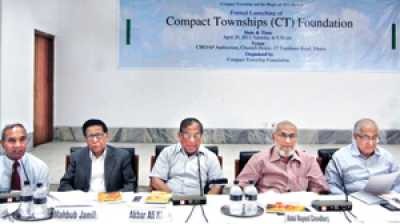
Formal Inaugural Ceremony of Compact Township (CT) Foundation/April 20, 2013

Posted on জুন ১৮, ২০১৩ by ctfoundation Posted in CT Welcome .
Formal Inaugural Ceremony of Compact Township (CT) Foundation/April 20, 2013

Formal Inaugural Ceremony of Compact Township (CT) Foundation/April 20, 2013

CT Launching 20 April 2013

Minutes on CT Core team 2nd Meeting Dec 14, 2012

Posted on জুন ১৮, ২০১৩ by ctfoundation Posted in CT Welcome .

Download (PDF, 78KB)

Formal Inaugural Ceremony of Compact Township (CT) Foundation April 20, 2013

Posted on জুন ১৬, ২০১৩ by ctfoundation Posted in CT Welcome .

1

Sunday, April 21, 2013

Compact townships promise to reduce urban congestion

Economists speak at the launch of Compact Township Foundation

Star Business Report

The tendency to hold on to ownership rights prevents the planned and controlled use of lands, setting the country back, economists said yesterday.

To accommodate the fast growing population, the country is losing 1-2 percent of agricultural land a year, Salim Rashid, chairperson of Compact Township Foundation, said at a seminar. The Foundation was launched yesterday. “How will the people be fed if this continues?” he said while presenting his keynote paper.Rashid, also a development economist, suggested urbanization in a decentralized way or on a compact township basis. “Not only are compact townships a solution to the problems of urbanization, floods, industrialization and agro-production, it would also help the nation achieve double-digit economic growth.”

A compact township is an agglomeration of houses, hospitals, schools, markets, rural industries and local government units that provide all basic services to a population of about 20,000 people.

.Akbar Ali Khan, an economist and former adviser to caretaker government, said a very pertaining challenge facing the country is in reconciling the huge population to the limited supply of land.

“Land is a fundamental concept in Bangladesh, but we hardly talk on this issue.” He cited a study in the US which said for every 12.5 people one hectare of land is needed for their non-agriculture needs.” In that context, for the 16 core people of Bangladesh the entire land area would have to be dedicated for non-agricultural needs. But, we are getting by — through hunching.” Bangladesh’s economic growth is in positive territory by quantity.” But if we think about the qualitative growth, it will be negative. And if we cannot relate the mass people with the limited land in planned way, it wouldn’t be long before the quantitative growth, too, trespasses to the wrong side of zero.” Khan cited the case of India, where apart from compact villages corporate villages are set up in a centralized manner.” But in our country the villages or the towns are all over the place.”

He said people’s unwillingness to let go of the land they inherited poses a major setback to establishing compact townships in Bangladesh.” This issue should be addressed first before proceeding further with the concept of compact townships,” Khan said, while calling for support from the private sector in applying the concept in Bangladesh. Rehman Sobhan, a noted economist and chairman of Centre for Policy Dialogue, too, called for decentralization, while touching on the thorny issue of people’s deep ties to ancestral lands.” It is a socio-political issue. During reallocation of lands and final settlement, people will invariably question who the decision maker is.”

Abdul Muyeed Chowdhury, chairperson of BRAC Net and a former adviser to caretaker government, said there is no alternative to the compact township concept in Bangladesh.” The government should pore over the computerized records of existing lands to identify the cultivable lands, water bodies, forest lands and settlement areas.” However, decentralization must be accompanied with provincial government, he said.” Although Bangladesh is a small country in terms of land, it’s a big one in terms of population. For any little task we have to come to Dhaka.”

Jamilur Reza Choudhury, vice-chancellor of Asia Pacific University, proposed a strong rail network as an alternative to compact townships.” If we can introduce commuter trains, physical movement will be easier and less time-consuming. Rural-urban migration will drop as well.”

Mahbub Jamil, chairman of Singer Bangladesh, said: “All the activities are now centralized in Dhaka — it is a major reason for unplanned urbanization cantering the capital city.”

2

Sunday 21 April 2013

10pc growth is achievable through Compact Township


Maximum economic use of land, population coordination, facilitation of economic development, protection of arable land and discourage of urban migration would be attainable successfully through the compact township, speakers said here today at a programmer “Bangladesh could achieve 10 percent growth by implementing the compact township programme,” they added.

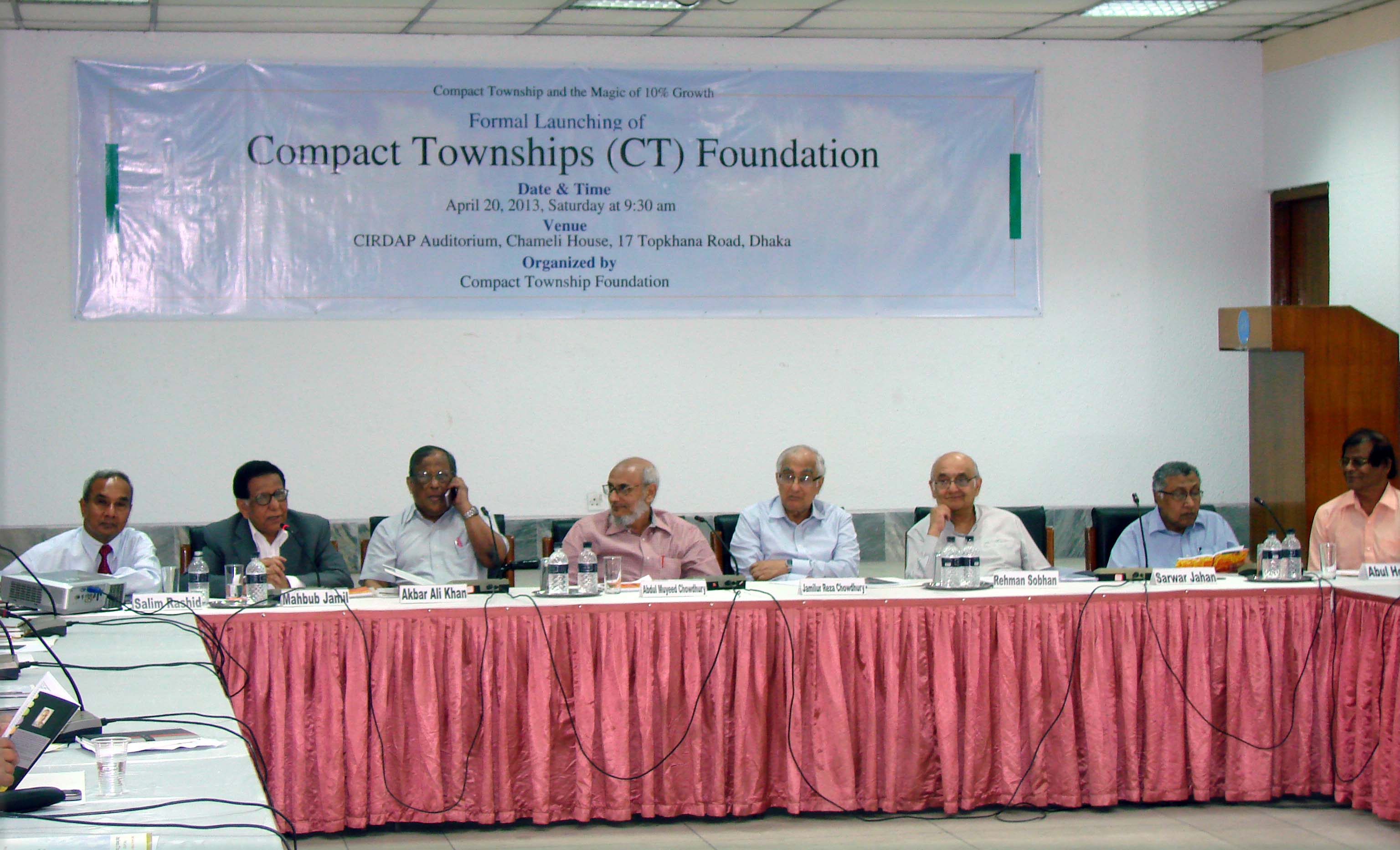
They made the remarks at the launching ceremony of Compact Township Foundation at CIRDAP auditorium. Dr Salim Rashid, chairperson of Compact Township (CT) Foundation, made a keynote presentation on the CT

In his presentation, Salim Rashid said a Compact Township (CT) is an agglomeration of houses, hospitals, schools, markets, rural industries and local governmental units with all basic services for about 20,000 people, and it would be largely self-governing and self-financing.

The size is small enough for traffic within the CT to be conducted by non-motorized vehicles and for motorized traffic to thus isolated from the CT itself, he added.

Professor Dr Jamilur Reza Chowdhury, Vice Chancellor of the University of Asia Pacific, spoke as chief guest with former adviser to the Caretaker Government Abdul Muyeed Chowdhury in the chair.

Eminent economist Rehman Sobhan, former adviser to the Caretaker Government Dr Akbar Ali Khan, SINGER Bangladesh chairman Mahbub Jamil and Prof Sarwar Jahan of BUET, among others, took part as discussants. Dr Abul Hossain, CT Foundation secretary general, gave welcome speech.

Jamilur Reza Chowdhury said urbanization is good for country’s economy and so far there is no alternative of urbanization toward development.“The Compact Township would be good tools for urbanization and it has a bright future in the country,” he added.

Rehman Sobhan emphasized on the relocation process for the compact township, as the relocation would be a big issue toward implementing the project.

Besides, property rights would also be a critical issue to share the resources in the compact township, he observed.

Akbar Ali Khan said the Compact Township would be implemented involving the government, NGOs, businessmen, private public partnership and voluntary organizations.

“We have to think in realistic way rather than the holistic approach to implement the compact township, as all the issues would not be possible to implement in the country,” he added. —BSS

3

Compact townships sought to stop loss of farm lands

Published : Sunday, 21 April 2013

4

Former caretaker adviser Akbar Ali Khan speaking at the formal launching ceremony of Compact Townships (CT) Foundation at CIRDAP Auditorium in the city Saturday. — Focus Bangla Photo Speakers on Saturday urged the government to make land records across the country computerized as well as frame physical plans for rural and urban areas to build compact townships (CTs).A compact township comprises houses, hospitals, schools, markets, rural industries and local governmental units with all basic services.

 They also said the government should identify agricultural, wetlands and forests the country will need in 2050 and take necessary steps to preserve those for greater good of the country.

They made the suggestions at the formal launching ceremony of Compact Township Foundation at the CIRDAP auditorium in the city. The Bengali version of ‘Compact Township and the magic of 10 per cent growth’ was also launched on the day.

Asia Pacific University Vice Chancellor Jamilur Reza Chowdhury was present as the chief guest. Centre for Policy Dialogue (CPD) chairman Prof Rehman Sobhan and former advisor to the caretaker government Dr Akbar Ali Khan were present on the occasion.

Keynote presenter Prof Salim Rashid, chairperson of the Compact Township (CT) Foundation said, “Bangladesh is losing almost one per cent of agricultural lands every year for horizontal growth in housing. Faster urbanisation is attracting more rural migrants. It makes urban areas less livable and less productive.”

He said: “The Compact Township is an agglomeration of houses, hospitals, schools, markets, rural industries and local governmental units with all basic services for about 20,000 people.”

“Full employment needs an additional 50 million jobs by 2050. If CT is introduced, it will help ensure accommodation with all modern facilities and stop loss of agricultural lands.”

He said: “About 4,500 CTs are needed for 90 million people. About 100 acres of land and $30-60 million are needed for each CT. If we can decentralise the offices from Dhaka and make it congestion free, the savings would allow setting up of 90-100 CTs per year, or 3,000 CTs plus by 2050.”

Prof Jamilur Reza Chowdhury said, “China and Korea have introduced the township model in 1970s and we can also accept it. The government too can make people aware of this model in our country.”

Mr Chowdhury said: “The population of Bangladesh will be 250 million by 2050 and proper management through compact township can help accommodate this big population.”

Prof Rehman Sobhan said, “The compact township is a time-befitting model. But long-term planning is needed to implement this.”Mr Sobhan said: “Implementation of this model should be started from the upazila level and it will be a modern system for development. People’s awareness is a must for execution of the model.”

 Dr Akbar Ali Khan said: “The main weak point of our economy is imbalance of population and land. We will lose our agricultural lands if we want to set up schools, colleges and roads and accommodation like foreign countries across the world.”

Dr Khan said: “People are worried about the property rights. If we want to implement any model, we have to think properly. The government had taken such an initiative earlier but it failed more than cent per cent. So we have to do it through public-private partnership.”

He said people, businesses, local government and voluntary organisations can play an important role for implementation of compact township model. It is very good model, but it is not possible to implement properly initially.”

 Abdul Muyeed Chowdhury, chairperson BRAC Net, presided over the discussion meeting.

Heading Formal Inaugural Ceremony of Compact Township1_Page_5 Heading Formal Inaugural Ceremony of Compact Township1_Page_6

Executive Committee Meeting and Decisions

Posted on জুন ১৬, ২০১৩ by ctfoundation Posted in CT Welcome .

Download (PDF, 67KB)

Orientation Meeting/CT Foundation/07 and 14 Dec 2012

Posted on জুন ১৬, ২০১৩ by ctfoundation Posted in CT Welcome .

Download (PDF, 294KB)

Compact Townships and urbanisation in Bangladesh (Presented on 14 December 2012)

Posted on জুন ১৩, ২০১৩ by ctfoundation Posted in CT Welcome .

Download (PPTX, 936KB)

Formal Inaugural Ceremony of Compact Township (CT) Foundation/April 20, 2013

Posted on জুন ১৩, ২০১৩ by ctfoundation Posted in CT Welcome .

(Newspaper clips below)

1

Sunday, April 21, 2013

Compact townships promise to reduce urban congestion

Economists speak at the launch of Compact Township Foundation

Star Business Report

The tendency to hold on to ownership rights prevents the planned and controlled use of lands, setting the country back, economists said yesterday.

To accommodate the fast growing population, the country is losing 1-2 percent of agricultural land a year, Salim Rashid, chairperson of Compact Township Foundation, said at a seminar. The Foundation was launched yesterday.
“How will the people be fed if this continues?” he said while presenting his keynote paper.
Rashid, also a development economist, suggested urbanization in a decentralized way or on a compact township basis.
“Not only are compact townships a solution to the problems of urbanization, floods, industrialization and agro-production, it would also help the nation achieve double-digit economic growth.”

A compact township is an agglomeration of houses, hospitals, schools, markets, rural industries and local government units that provide all basic services to a population of about 20,000 people.

.Akbar Ali Khan, an economist and former adviser to caretaker government, said a very pertaining challenge facing the country is in reconciling the huge population to the limited supply of land.

“Land is a fundamental concept in Bangladesh, but we hardly talk on this issue.” He cited a study in the US which said for every 12.5 people one hectare of land is needed for their non-agriculture needs.” In that context, for the 16 core people of Bangladesh the entire land area would have to be dedicated for non-agricultural needs. But, we are getting by — through hunching.” Bangladesh’s economic growth is in positive territory by quantity.” But if we think about the qualitative growth, it will be negative. And if we cannot relate the mass people with the limited land in planned way, it wouldn’t be long before the quantitative growth, too, trespasses to the wrong side of zero.” Khan cited the case of India, where apart from compact villages corporate villages are set up in a centralized manner.” But in our country the villages or the towns are all over the place.”

He said people’s unwillingness to let go of the land they inherited poses a major setback to establishing compact townships in Bangladesh.” This issue should be addressed first before proceeding further with the concept of compact townships,” Khan said, while calling for support from the private sector in applying the concept in Bangladesh. Rehman Sobhan, a noted economist and chairman of Centre for Policy Dialogue, too, called for decentralization, while touching on the thorny issue of people’s deep ties to ancestral lands.” It is a socio-political issue. During reallocation of lands and final settlement, people will invariably question who the decision maker is.”

Abdul Muyeed Chowdhury, chairperson of BRAC Net and a former adviser to caretaker government, said there is no alternative to the compact township concept in Bangladesh.” The government should pore over the computerized records of existing lands to identify the cultivable lands, water bodies, forest lands and settlement areas.” However, decentralization must be accompanied with provincial government, he said.” Although Bangladesh is a small country in terms of land, it’s a big one in terms of population. For any little task we have to come to Dhaka.”

Jamilur Reza Choudhury, vice-chancellor of Asia Pacific University, proposed a strong rail network as an alternative to compact townships.” If we can introduce commuter trains, physical movement will be easier and less time-consuming. Rural-urban migration will drop as well.”

Mahbub Jamil, chairman of Singer Bangladesh, said: “All the activities are now centralized in Dhaka — it is a major reason for unplanned urbanization cantering the capital city.”

2

Sunday 21 April 2013


10pc growth is achievable through Compact Township


Maximum economic use of land, population coordination, facilitation of economic development, protection of arable land and discourage of urban migration would be attainable successfully through the compact township, speakers said here today at a programme.
“Bangladesh could achieve 10 percent growth by implementing the compact township programme,” they added.

They made the remarks at the launching ceremony of Compact Township Foundation at CIRDAP auditorium. Dr Salim Rashid, chairperson of Compact Township (CT) Foundation, made a keynote presentation on the CT

In his presentation, Salim Rashid said a Compact Township (CT) is an agglomeration of houses, hospitals, schools, markets, rural industries and local governmental units with all basic services for about 20,000 people, and it would be largely self-governing and self financing.

The size is small enough for traffic within the CT to be conducted by non-motorized vehicles and for motorized traffic to thus isolated from the CT itself, he added.

Professor Dr Jamilur Reza Chowdhury, Vice Chancellor of the University of Asia Pacific, spoke as chief guest with former adviser to the Caretaker Government Abdul Muyeed Chowdhury in the chair.

Eminent economist Rehman Sobhan, former adviser to the Caretaker Government Dr Akbar Ali Khan, SINGER Bangladesh chairman Mahbub Jamil and Prof Sarwar Jahan of BUET, among others, took part as discussants. Dr Abul Hossain, CT Foundation secretary general, gave welcome speech.

Jamilur Reza Chowdhury said urbanization is good for country’s economy and so far there is no alternative of urbanization toward development.“The Compact Township would be good tools for urbanization and it has a bright future in the country,” he added.

Rehman Sobhan emphasized on the relocation process for the compact township, as the relocation would be a big issue toward implementing the project.

Besides, property rights would also be a critical issue to share the resources in the compact township, he observed.

Akbar Ali Khan said the Compact Township would be implemented involving the government, NGOs, businessmen, private public partnership and voluntary organizations.

“We have to think in realistic way rather than the holistic approach to implement the compact township, as all the issues would not be possible to implement in the country,” he added. —BSS

3

Compact townships sought to stop loss of farm lands

Published : Sunday, 21 April 2013

4

Former caretaker adviser Akbar Ali Khan speaking at the formal launching ceremony of Compact Townships (CT) Foundation at CIRDAP Auditorium in the city Saturday. — Focus Bangla Photo

Speakers on Saturday urged the government to make land records across the country computerized as well as frame physical plans for rural and urban areas to build compact townships(CTs).

A compact township comprises houses, hospitals, schools, markets, rural industries and local governmental units with all basic services.

 They also said the government should identify agricultural, wetlands and forests the country will need in 2050 and take necessary steps to preserve those for greater good of the country.

They made the suggestions at the formal launching ceremony of Compact Township Foundation at the CIRDAP auditorium in the city. The Bengali version of ‘Compact Township and the magic of 10 per cent growth’ was also launched on the day.

Asia Pacific University Vice Chancellor Jamilur Reza Chowdhury was present as the chief guest. Centre for Policy Dialogue (CPD) chairman Prof Rehman Sobhan and former advisor to the caretaker government Dr Akbar Ali Khan were present on the occasion.


Keynote presenter Prof Salim Rashid, chairperson of the Compact Township (CT) Foundation said, “Bangladesh is losing almost one per cent of agricultural lands every year for horizontal growth in housing. Faster urbanisation is attracting more rural migrants. It makes urban areas less livable and less productive.”

He said: “The Compact Township is an agglomeration of houses, hospitals, schools, markets, rural industries and local governmental units with all basic services for about 20,000 people.”

“Full employment needs an additional 50 million jobs by 2050. If CT is introduced, it will help ensure accommodation with all modern facilities and stop loss of agricultural lands.”

He said: “About 4,500 CTs are needed for 90 million people. About 100 acres of land and $30-60 million are needed for each CT. If we can decentralise the offices from Dhaka and make it congestion free, the savings would allow setting up of 90-100 CTs per year, or 3,000 CTs plus by 2050.”

Prof Jamilur Reza Chowdhury said, “China and Korea have introduced the township model in 1970s and we can also accept it. The government too can make people aware of this model in our country.”

Mr Chowdhury said: “The population of Bangladesh will be 250 million by 2050 and proper management through compact township can help accommodate this big population.”

Prof Rehman Sobhan said, “The compact township is a time-befitting model. But long-term planning is needed to implement this.”Mr Sobhan said: “Implementation of this model should be started from the upazila level and it will be a modern system for development. People’s awareness is a must for execution of the model.”

 Dr Akbar Ali Khan said: “The main weak point of our economy is imbalance of population and land. We will lose our agricultural lands if we want to set up schools, colleges and roads and accommodation like foreign countries across the world.”

Dr Khan said: “People are worried about the property rights. If we want to implement any model, we have to think properly. The government had taken such an initiative earlier but it failed more than cent per cent. So we have to do it through public-private partnership.”


He said people, businesses, local government and voluntary organisations can play an important role for implementation of compact township model. It is very good model, but it is not possible to implement properly initially.”

 Abdul Muyeed Chowdhury, chairperson BRAC Net, presided over the discussion meeting.

Next Page »

The Compact Township Idea

• An agglomeration of houses, hospitals, schools, markets, rural industries and local governmental units with all basic services for about 20,000 people.

• It is to be largely self-governing and self financing.

• The size is small enough for traffic within the CT and access by NMT.

• MT will be isolated from the CT and make it environmentally friendly.

Bangladesh Need (CT) Now

• Bangladesh is losing agricultural land every year for horizontal growth in housing.

• Faster urbanization is attracting more migrants from the rural areas. Make urban areas less livable and less productive.

• Unemployment in rural Bangladesh.

• Organize the country’s economy for modern economic growth-which need infrastructure.

Ceremony of CTF 20 April 2013

CTF Outreach Meetings done 2014

Why are we concerned?

Copyright CT Foundation 2012

Pages

  • About us
  • Activities
  • All Activities
  • Article & Debate
  • Bangladesh
  • CTF Research & Publication
  • CTF Videos
  • Current Activities
  • Documents
  • Donate
  • Events
  • Gallery
  • Home
    • Contact Us
  • International
  • New Event
  • Old Event
  • Research and Report
  • Seminar and Workshop
  • Who We Are
  • Working Paper and Report

Archives

  • March 2020
  • December 2019
  • November 2019
  • September 2019
  • August 2019
  • October 2018
  • March 2018
  • December 2017
  • November 2017
  • October 2017
  • April 2017
  • March 2017
  • December 2016
  • October 2016
  • September 2016
  • May 2015
  • April 2015
  • March 2015
  • January 2015
  • December 2014
  • November 2014
  • October 2014
  • September 2014
  • August 2014
  • July 2014
  • June 2014
  • May 2014
  • April 2014
  • June 2013
  • November 2012

Categories

  • CT Welcome (১১৪)

WordPress

  • Log in
  • WordPress

CyberChimps WordPress Themes

© CT Foundation